Does the VA Drug Test Veterans? VA Drug Testing Policy Explained
Veterans receiving VA healthcare are not subjected to routine drug testing simply for receiving care. VA drug testing occurs only in specific clinical contexts — pain management programs, SUD treatment, mental health monitoring — where it has a treatment purpose. Results are used for treatment planning only. They are not shared with law enforcement, they do not affect benefits, and they are protected by strict confidentiality laws.
Does the VA Drug Test? — The Short Answer
No, VA does not randomly drug test veterans receiving general VA care, and standard VA bloodwork does not screen for marijuana. Drug testing happens only in clinical contexts where it has a treatment purpose — pain management, SUD treatment, certain mental health monitoring, and psychiatric inpatient admission. Results stay in your clinical record under 38 U.S.C. § 7332 confidentiality and do not trigger law enforcement referrals or benefit consequences.
Where Drug Testing Occurs at VA
Drug testing in VA healthcare is limited to specific clinical contexts:
Chronic Pain Management Programs
Veterans receiving chronic opioid therapy typically undergo periodic urine drug screens as part of pain management. The purposes are:
- Confirming that veterans are taking their prescribed opioids (not diverting them)
- Identifying additional substances that may interact with opioids
- Monitoring for substance use patterns that suggest emerging substance use disorder
- Protecting patient safety by identifying combinations that increase overdose risk
If cannabis appears on a pain management drug screen, it is not grounds for termination of care. The provider will typically discuss it with the veteran as part of treatment planning and may adjust opioid dosing or treatment approach based on the clinical picture. Cannabis-opioid interaction notes.
Substance Use Disorder Treatment
Veterans in VA SUD treatment programs are typically tested periodically as part of treatment monitoring. The purpose is therapeutic — tracking abstinence or use patterns to inform treatment, not punishing veterans. The VA's contingency management program, operating at 100+ VA medical centers, specifically uses drug screen results as the basis for evidence-based reinforcement of abstinence (veterans earn prizes or vouchers for verified abstinence). VA SUD programs also offer Motivational Enhancement Therapy (MET) for cannabis use disorder — a brief, non-confrontational counseling approach (typically 2–4 sessions) that helps the veteran resolve ambivalence about reducing or stopping use. MET is voluntary, does not require abstinence to enroll, and is offered alongside Cognitive Behavioral Therapy and contingency management.
Mental Health Clinical Decisions
Some VA mental health providers may order drug screens when there is a clinical question about substance use that cannot be answered by patient interview alone. This is typically patient-informed and discussed in advance.
Psychiatric Inpatient Admission
Veterans admitted to VA psychiatric inpatient units may be drug-tested on admission as part of standard medical workup. This is to inform treatment (especially if the admission involves acute psychiatric symptoms that could be substance-related) rather than to gatekeep care.
Where Drug Testing Does NOT Happen
- Routine primary care visits
- Specialty consultations (dermatology, orthopedics, cardiology, etc.)
- Dental care
- VA pharmacy pickups
- Benefits examinations (C&P exams for disability rating)
- Vet Center visits
If you are concerned about drug testing at a specific VA service, ask your care team in advance. Most VA services will tell you exactly when drug testing is part of the protocol.
Does the VA Check for Marijuana Use During Routine Lab Work?
No. Standard VA bloodwork does not screen for THC, marijuana metabolites, or any controlled substance. The routine labs your VA primary-care provider orders — comprehensive metabolic panel (CMP), complete blood count (CBC), hemoglobin A1c, lipid panel, thyroid (TSH), liver function (LFT), basic metabolic panel (BMP), urinalysis (chemistry/dipstick) — do not include any drug-of-abuse panel. Cannabis is invisible to all of them.
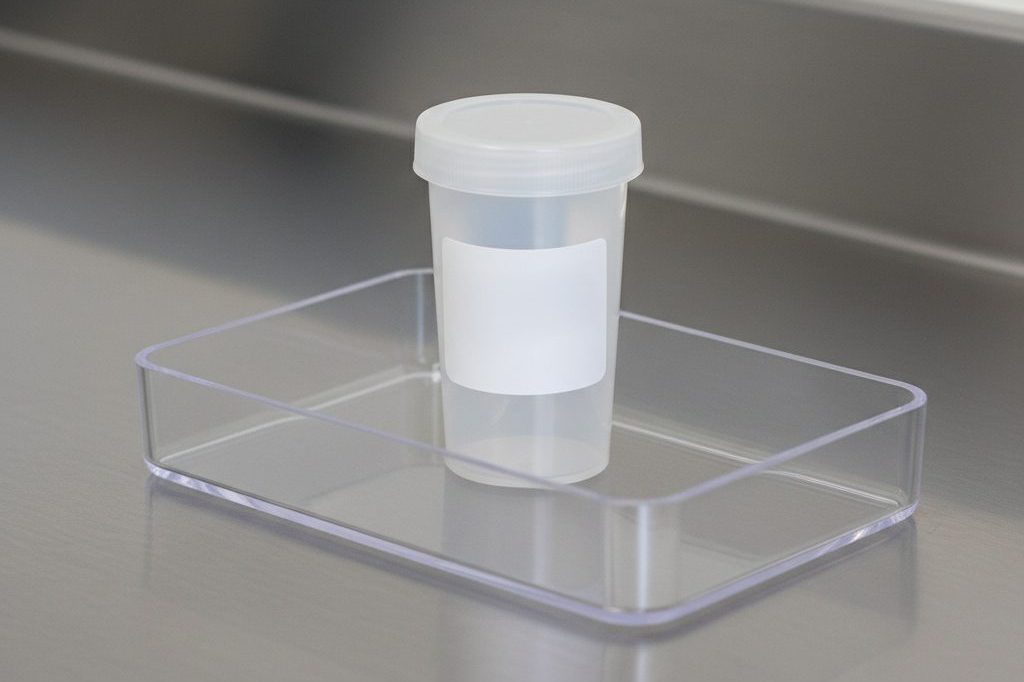
A drug screen is a separately ordered test. It is almost always a urine sample (not a blood draw), and it requires the provider to specifically order a "urine drug screen" or "tox screen" with named substances. Even when VA blood is drawn, ordinary blood panels do not detect THC. Blood testing for cannabis is a specialized test ordered for impairment investigation or specific clinical research, not for routine annual physicals.
One nuance: a urinalysis ordered for kidney function, infection, or pregnancy uses chemistry strips that look for protein, glucose, blood, and similar markers — not drugs. The same urine cup, processed through a drug screen, is a different lab order. Your VA provider must affirmatively check the "drug screen" boxes for cannabis to be tested. If you are unsure, you can ask the lab tech or your provider what panels are running on your sample.
Does the VA Drug Test Employees?
Yes — but this is the VA acting as a federal employer, separate from drug testing of veteran patients. VA employees in Testing Designated Positions (TDPs) are subject to federal workplace drug testing under Executive Order 12564 (1986), the Drug-Free Workplace Act, and (for transportation roles) DOT rules. This includes:
- Pre-employment testing for new hires into TDPs
- Random testing for employees in TDPs
- Reasonable-suspicion testing based on documented behavior
- Post-accident testing for incidents at work
- Return-to-duty and follow-up testing after a positive result
This program has nothing to do with the clinical drug screens performed on veteran patients. Patient drug screens are protected by 38 U.S.C. § 7332 confidentiality and used only for treatment. Employee drug screens are workplace tests that follow federal SAMHSA mandatory guidelines. Federal workplace drug-testing rules apply to VA staff like any other federal agency.
For veterans working at the VA (not just receiving care): if you hold a TDP, federal rules apply regardless of what your state says about cannabis. State legalization, a medical card, and CBD products are not defenses. See our federal employment page for the full picture.
How Results Are Used
Drug screen results in VA clinical contexts are used for:
- Treatment planning — adjusting medication dosing, treatment approach, or referrals
- Medication safety — identifying potentially dangerous combinations
- Clinical documentation — in the medical record under 38 U.S.C. § 7332 confidentiality
- Treatment outcome assessment — particularly in SUD treatment programs
How Results Are NOT Used
- Not reported to law enforcement. VA does not refer patients to police based on positive drug screens. Federal and state drug enforcement agencies do not have access to VA treatment records.
- Not shared with employers. VA does not report cannabis use to any employer — including federal employers.
- Not used to deny VA benefits. 38 U.S.C. § 7332 confidentiality prevents benefits administrators from accessing clinical substance use records without your written consent.
- Not used to terminate VA care. Positive cannabis results do not disqualify veterans from ongoing VA services. Opioid prescriptions may be adjusted, but overall VA care continues.
- Not shared with family members without your written consent, with narrow exceptions for immediate safety concerns.
Your Rights If You Are Asked to Be Tested
- You have the right to decline. Drug testing in VA is not mandatory in the sense that law enforcement drug testing is mandatory. Declining may have clinical consequences (e.g., inability to continue a pain management program with required monitoring), but it is your decision.
- You have the right to know why. Ask the provider what the test will be used for, what substances it will screen, and how the results will affect your care.
- You have the right to discuss results privately. Positive results should be discussed with you in a confidential setting, not documented without conversation.
- You have the right to appeal treatment decisions based on results. If you believe a provider is misusing drug screen results or applying inappropriate consequences, you can escalate to the Patient Advocate, request a different provider, or file a formal complaint.
The Confidentiality Protection
VA substance use records are protected under 38 U.S.C. § 7332, which provides stricter confidentiality than HIPAA. Specifically:
- Records cannot be disclosed outside your VA treatment team without your written consent
- Records cannot be subpoenaed by state or federal courts for most purposes without specific patient consent
- Records cannot be shared with law enforcement, employers, or benefits administrators
- Penalties for unauthorized disclosure include civil and potentially criminal consequences for the VA employee involved
This is one of the strongest confidentiality protections in U.S. healthcare. More on 38 U.S.C. § 7332.
Related Reading
- Records Confidentiality
- Benefits & Rights Overview
- CUD Treatment Options
- Honest Disclosure
- Federal Employment & Cannabis
How Drug Tests Actually Work
For the science and mechanics of cannabis drug testing — what the tests detect, how long marijuana stays detectable, the difference between THC and the THC-COOH metabolite, and why standard bloodwork does not screen for cannabis — see our companion site CannabisDrugTest.org:
- Urine drug testing — the test type used in VA pain management and SUD programs
- Blood testing for THC — why routine VA labs do not detect cannabis
- THC vs. THC-COOH — what drug screens actually measure
- Detection windows — how long cannabis stays detectable
- Federal workplace rules — for veterans employed by the VA or other federal agencies